
En route pour Hinkley Point C avec Chris Bakken
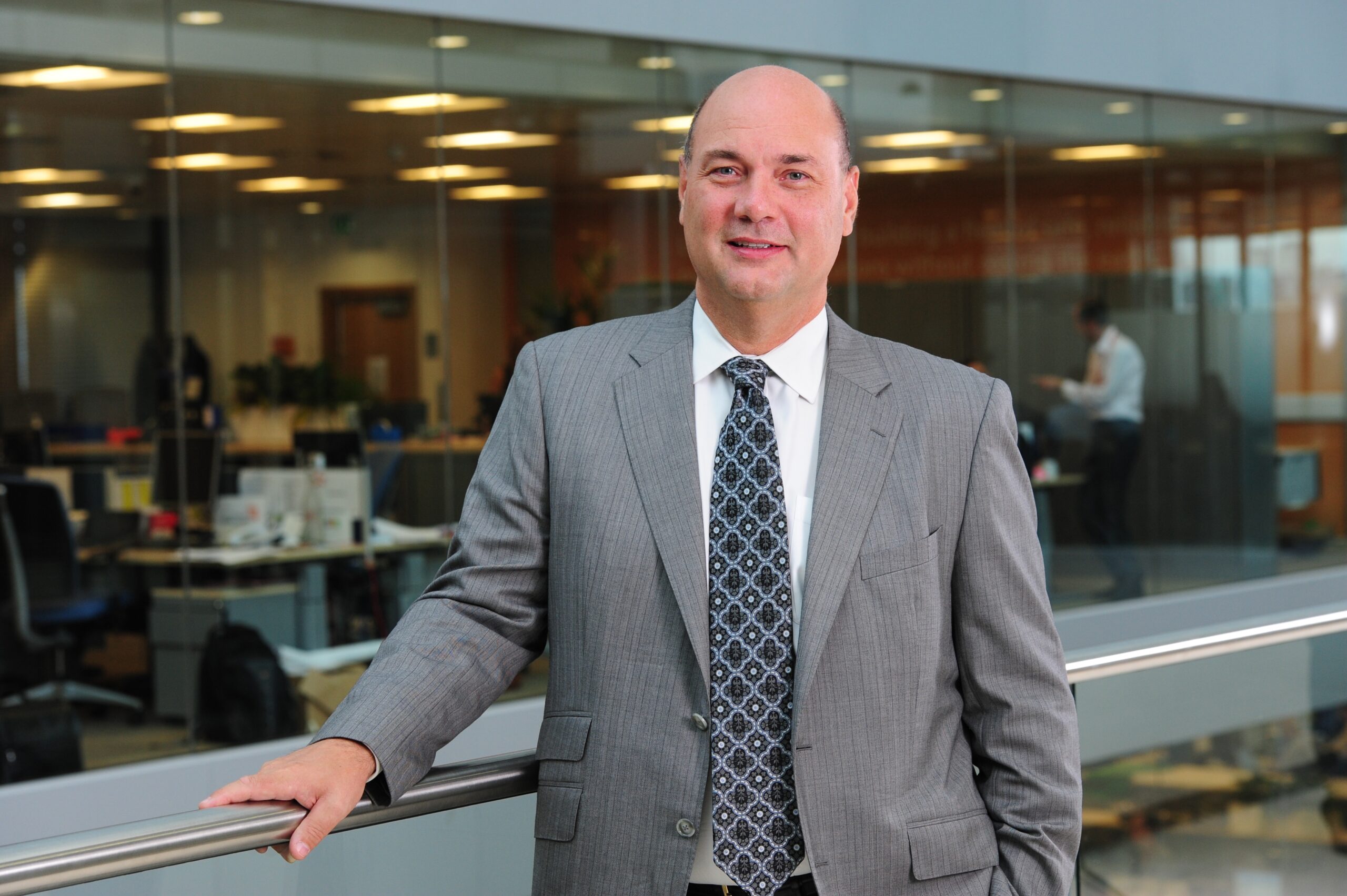
Mr Bakken, can you please tell us a bit about your background?
Chris Bakken – I was born in the USA and after my electrical engineering studies I became a licensed senior reactor operator for nine years, before studying for a Master’s degree in industrial administration. Following this, I then spent a number of years focused on improving the performance of challenging US nuclear plants, and it was during this time that I learned to lead and drive change with stakeholders such as the regulator, the unions and the plants’ staff.
An education at a British school in Lausanne, Switzerland, where I learned French, gave me a taste for European culture from an early age. Having served as President and Chief Nuclear Officer of an American nuclear operator, PSEG Nuclear, I decided to move back to Europe where I joined British Energy in May 2006 as Head for Operations in the Eastern region.
Having spent my career on operating plants, I wanted the challenge of something new and fresh, so I joined EDF Energy’s Nuclear New Build Executive Team as Director of Hinkley Point C Project, where my French speaking skills prove useful! This project is the biggest challenge of my career because of its sheer scale and its complexity!
What is the UK public’s current acceptance level for nuclear-based electricity generation, at a national level?
CB – There is broad-based public support for 3 key reasons: nuclear energy is a low-carbon source of electricity, it ensures a stable price and offers a secure supply of power. As regards the UK government, we have also seen very strong cross party support, although this project was not the talking point in the run-up to the elections. Some key statistics taken from research in April 2015: Nearly two thirds of the UK population agree that nuclear energy is needed as part of the country’s energy mix. Almost half of the population say they are favourable towards nuclear energy as a method of producing electricity.
Are there any other competitors to the Hinkley Point C project?
CB – There are currently two main competitors, Horizon and NuGen trying to build their own plants in different locations. Horizon, a partnership between Hitachi and General Electric, wishes to build an Advanced BWR at the Wylfa site in North Wales and is currently undertaking the Generic Design Assessment (GDA) process but is still several years behind EDF Energy. NuGen, a partnership between Toshiba and Engie is only just re-commencing the GDA process to build an AP1000 at the Sellafield site in Cumbria. EDF Energy is ahead of the curve and that brings with it many challenges, but with the support of the EDF Group and the motivated and talented people on our team we have already surmounted problems and are ready for the next ones.
Have we drawn on past experience of Anglo-French projects?
CB – There are currently two main competitors, Horizon and NuGen trying to build their own plants in different locations. Horizon, a partnership between Hitachi and General Electric, wishes to build an Advanced BWR at the Wylfa site in North Wales and is currently undertaking the Generic Design Assessment (GDA) process but is still several years behind EDF Energy. NuGen, a partnership between Toshiba and Engie is only just re-commencing the GDA process to build an AP1000 at the Sellafield site in Cumbria. EDF Energy is ahead of the curve and that brings with it many challenges, but with the support of the EDF Group and the motivated and talented people on our team we have already surmounted problems and are ready for the next ones.
Can you remind us of the main past and future milestones of the Hinkley Point C project? How is the project progressing?
CB – All milestones are important; this being part of their definition. The ones that come to my mind right now are the end of the GDA process; which was the first licensing step. There are also the issue of environmental permits, the planning consent and of course the Contract for Difference which is a formal contract with the UK Government.
We are very close to a Financial Investment Decision, after which there is no turning back, all the more for a project of this scale.
Will you join next European Nuclear Young Generation Forum* (ENYGF) in Paris? What is the message you would like students and young professionals to have in mind when discussing nuclear energy?
CB – I personally won’t be able to attend; however we have promoted the event internally and some of our young engineers will have the opportunity to be present.
I strongly believe that we need to promote such events because the young generation is our future, so we must do all we can to retain the bright and motivated people that the nuclear industry needs. So if you are, or consider becoming an engineer of the nuclear field, don’t be shy and just register to ENYGF!
A final comment?
CB – I have had a wonderfully challenging and rewarding career in the nuclear industry and I believe that society benefits greatly from what we do. I have met and worked with a great diversity of fascinating people and continue to be proud of the bright young people I see coming through. I can honestly say that it’s simply a privilege to be part of it.